
 Kibbutz Harduf, Israel
Project TEN is thrilled to partner with Israel Pathways to bring you a truly cross-cultural volunteer opportunity in the Galilee with participants from the United States, the UK, Israel and all over the world.
As a participant in a Jewish service-learning program, you can't get any closer to the center of Jewish history – and the Jewish future – than Israel. Project TEN is continuing is successful partnership with the Israel Pathways Masa program to bring you its second Israel-based center in Kibbutz Harduf, a forest location in the Lower Galilee, about 8 miles southeast of Haifa.

Israel as a whole is a developed country with a thriving economy. Like many countries, it has regions that are relatively vulnerable economically and culturally, including the Galilee.
The Galilee region is home to 1.3 million Israeli citizens, about half of whom are Jewish, and half Arab (of different religions, including Christians, Druze, and Muslims). Neighborly relations are peaceful, but the economic stresses of life in the Galilee, and the relative lack of infrastructure and access to higher education and culture, adds a different dimension to the relationship between Arabs and Jews. Unemployment in Arab villages is high, and about 55 percent of Arab families in the region live below the poverty line.
About the Volunteer Service
In addition to all the other goals of Project TEN, the center in Harduf aims to help acquaint you with Jewish-Arab communities and relationships in the Galilee, and to grow your relationship with the values of Judaism by collaborating with Arabs, promoting co-existence, and bridging conflict-causing cultural and economic gaps.
The focal point of the volunteer activities is Sha’ar La’adam (“Gate for Adam/People”), a community center on the forest grounds of Kibbutz Harduf. Founded in 2002, Sha’ar La’adam organizes educational, artistic, and ecological activities for Jews and Arabs together, drawing on relationships with the nearby Jewish and Arab villages of Ka’abiya, Shefar’am, and Tivon.
The center is a result of many years’ neighborly relations between people of different ethnicities, and peaceful handling of problems. All the partners are dedicated to mutual efforts, recognition of the “other,” and joint regional development for the benefit of all. Sha’ar La’adam includes a central assembly place, an open amphitheater, and a vegetable garden. Among its programs are: Jewish-Arabic Theater studies (for school credit) for high school students; extra help for youth in English, Arabic, and Hebrew; regular meetings of Arab and Jewish children; a women’s group that has met weekly for the last 10 years; an annual international Jewish-Arab festival; joint political activities on the national level to encourage mutual consideration; and joint ecological building and gardening projects.
Most of the volunteer work for Project TEN participants will be with youth-at-risk from the Tuvia rehabilitative boarding school (also on Kibbutz Harduf), and with young people from the neighboring Arab villages—both within schools and in after-school frameworks. You will also help Sha’ar La’adam expand its facilities by engaging in ecological building: physically creating new facility spaces so that the community center can host more, larger activities in the future. TEN participants generally engage in 2-3 different volunteer activities, depending on the day and time of day.
- Teach children at the Ka’abiya school to tend to their community garden (eg collecting rainwater, building with mud, etc.)
- Build new permanent, ecologically-conscious building facilities in the forest. The center plans, over time, to build an education and training center, an art center, and an ecological center.
- Teach English to small groups of children and students in Ka’abiya, Shefar’am, and the Tuvia boarding school
- Teach Art and Theater at schools in Ka’abiya and Shefar’am
- Lead workshops at schools about ecology, including practical experience at Sha’ar La’adam.
Educational Travel Throughout Israel
In addition you will receive:
- Hebrew Ulpan
- A "home-stay" family with whom you can build a relationship and share Shabbat and holidays
- Fantastic staff from Project TEN and Israel Pathways to help you along the way
As part of Project TEN, Israel Corps participants pay only $1,100 (about $9 per day), which covers all meals, accommodations, activities, travel seminars, and more.
American and UK participants can register with Israel Pathways and apply for a Masa grant that will make the trip especially affordable.
To learn more about the benefits of volunteering in Israel read the Executive Summary and Full Report of our study Serving a Complex Israel: A report on Israel-based Immersive Jewish Service-learning.
What is Project TEN?
Investing in Social Change
"תן", pronounced "Ten," is the Hebrew word for "Give."
It is also the name of a Jewish Agency initiative that is revolutionizing the Jewish meaning of giving.
The Jewish Agency's Project TEN: Global Tikkun Olam harnesses the energies and passion of Jewish young adults from Israel and around the world, who spend three months working and learning together in onsite service projects in vulnerable communities throughout the world and in Israel.
By highlighting the Jewish values that speak directly to sustainable development, social justice, and leadership, Project TEN serves as a unique immersive service-learning framework for volunteers wishing to engage in sustainable development as they themselves develop – forming an extensive Jewish identity-building experience. Volunteers in each of our development centers are carefully chosen from all over the world, connecting the global Jewish family to one another and to Israel. Read more
Masa Israel Journey
Masa Israel Journey works to make it as easy as possible for young adults to go to Israel. We offer grants and scholarships to help make the experience more affordable. All Masa Israel participants are eligible to apply for universal grants and need-based scholarships towards the cost of your program. Your grant/scholarship will be deducted from the total cost of your program. The amount available depends on your country of origin, age, and the length of your program.
Take a look at our Grant and Scholarship Policy to find out more about eligibility criteria and for information about what you’ll need to apply.
Masa Israel Journey is funded jointly by The Jewish Agency for Israel and by the Government of Israel.
Life at the Center
For the purpose of hosting volunteers with Project TEN, Sha’ar La’adam is building ecologically-friendly facilities where we will sleep, eat, and study. These facilities include ecological showers and toilets; a kitchen suitable for large numbers of people; a dining room; a complex of bedrooms (each room for 3-4 residents) with a common veranda; classrooms; and a train wagon being converted into an office. The facilities are being constructed with the goal of conserving energy, materials, and water while also providing shelter and heat, and necessities such as a refrigerator, furnishings, washing machines, etc.
Center Staff
Yakov Arnan
Yakov was born in 1958 and was among the founders of Kibbutz Harduf, a group of young people who strove to build a community in Israel with a new spiritual orientation. Yakov is also one of the founders of Zionism 2000, a movement for social responsibility in Israel, in which he was responsible for the educational development branch. In the 1990’s he was one of the founders of the School for Leadership. He also co-founded the Seminary Center at Harduf as well as the Hamila Theater, where he is a director, teacher, and actor. In 2000 he founded – together with Amin Swaed and Ilse Shuur – the center Sha'ar La'Adam – Bab Lil'insan (meaning: Gate to Humanity in Hebrew and in Arabic).
Faiz Swaed
Faiz was born in 1970 in the village of Swaed-Hmeira. He is a social worker and senior staff member at the Tuvia boarding school for at-risk children and youth situated at Kibbutz Harduf. Previously he worked for six years in the Sde-Boker boarding school in the Negev. For the past seven years he has been co-manager of Sha'ar La'Adam – Bab Lil'insan together with Yaakov Arnan.
Program Dates
The next Project TEN groups in Kibbutz Harduf will take place on the following dates:
- October 29, 2013 - March 2, 2014
- March 10 - July 10, 2014
- Summer Track: July 15 - August 14, 2014
- August 25, 2014 - January 20, 2015
- January 27 - June 26, 2015
- Summer Track: July 1 - August 12, 2015
(Dates may change slightly; contact our staff at [email protected] for updates).
Photos
Cost
The unsubsidized cost for the Project TEN program in Kibbutz Harduf, including volunteer, social, and learning activities; transportation between the center and your volunteer placement; and subsidized food and lodging, is $3500. However, Project TEN participants in Israel (who are coming from abroad) are eligible for significant grants and scholarships from Masa Israel Journey, which can bring down your expenses to the same $10-15 per day that you would pay for any other TEN center. Israelis, too, are eligible for extremely significant program subsidies, and should speak with the TEN coordinators about your true costs.
The cost does not include your airfare to the target country, health insurance, visa fees, or vaccinations.
Upon acceptance to the program you will be given instructions to reserve your place with payment to Israel Pathways.
Financial Aid
For information about the Pay It Forward Fund, which might subsidize up to 50 percent of your costs -- with your pledge to pay back the scholarship in the next few years to provide aid to future volunteers -- please go to our cost section.
Remember, Project TEN participants in Israel are eligible for grants and scholarships from Masa Israel Journey - see above!
About Kibbutz Harduf
Harduf is part of the Jezre’el Valley Regional Council, which has about 32,000 residents living in small communities and kibbutzim. The closest cities are Haifa to the northwest (8 miles) and Nazareth to the southeast (7 miles).
Kibbutz Harduf was established in 1982 by a group of young families inspired by Anthroposophy, the spiritual philosophy of Dr. Rudolf Steiner.
As part its unique ideology, Harduf has initiated numerous projects over the years in education, special education, mental health, welfare and organic agriculture. These include, among others the first Waldorf School in Israel and Harduf Organic Food Products Ltd. – Israel's largest producer and marketing firm of organic agricultural products.
There are currently about 650 people living in Harduf, of which 170 are children, youth and adults who require special support. These members, residents of the four rehabilitative frameworks within the kibbutz (two of which are Beit Elisha and the Tuvia Community) make up 25% of the kibbutz population and are fully integrated into the kibbutz life.
Sites of Interest
During your three months with Project TEN you will be working very hard at your volunteer service, Jewish learning, and other responsibilities. Although you will see much of the region through excursions and trips as part of your service learning and your Israel Pathways seminars, you might be interested in additionally touring the region on your own. If you want to arrive in Israel or the Galilee early or stay after Project TEN, and visit the sites on your own time, you are welcome to do so.
In the Jezre’el Valley Regional Council and Environs:
- Tzippori National Park: the fantastic excavated ruins of a Talmudic city. Described by Josephus Flavius as “the ornament of the Galilee,” it was the seat of the Sanhedrin and the home of Rabbi Yehudah HaNassi, who redacted the Mishnah. The partially restored 4,500-seat Roman theater affords a beautiful view and chances to reflect on the age-old clashes and interconnections between Judaism and surrounding cultures. Tzippori’s famed mosaics include the “Mona Lisa of the Galilee,” an evocative fifth-century synagogue floor, and the Nile Mosaic. The visitors’ center hosts tours and activities.
- Kfar Kedem: a reconstructed village of the Mishnaic era, where you can dress in ancient garb, milk goats, mill flour and use it to bake pitot, crush grapes, and even take home a homing pigeon (to release back to Kfar Kedem, of course). Tip: Visit Tzippori first to learn about the Mishnaic period, then visit Kfar Kedem to re-live it.
- Mekorot Eshkol Visitors Center: visit an important aquaduct and learn about Israel’s water systems and supplies, desalination, water recycling, etc.
- Tenuva Factory: Educational tours of Israel’s largest brand of dairy products
- Jeep B’Kfar: Jeep tours of the region
- Efek B’Shetach: Mountain bike tours of the region
- And a number of farms, wineries, petting zoos, and greenhouses that offer tours
Around the Galilee: A short car trip away is a variety of activities across the beautiful Galilee region, from wineries and horseback riding to water activities at Lake Kinneret and hiking at Mount Gilboa or Mount Tabor. The Israel Trail offers a great way to experience the region on foot. With a car rental or careful bus planning, you can easily enjoy the museums and parks in Haifa, night life in Rosh Pina, the restaurants and historical sites in Tiberias, the spiritual center of Tzfat, or off-the-beaten path camping sites.
Around Israel: From Harduf you can arrange to travel for day trips to the Upper Galilee and Golan, or for overnight trips to Tel Aviv, or Jerusalem, or head even further south to the Dead Sea, Negev desert, and Eilat.
Practical Details
Climate: Weather in the Lower Galilee is fairly moderate. In March, April, and May, when you will be participating in Project TEN, temperatures range from lows of 12C to highs of 25C (53F - 77F). (During the summer, the temperature can rise to 30C – 86F.) Expect it to rain quite a bit in March, but to be dryer (and very pleasant) in April and May.
Time Zone: All of Israel is in the GMT +2 time zone. Most of the year it is seven hours ahead of New York City.
Currency: Israel uses the New Israeli Shekel (or "shekel," or NIS). One shekel is equivalent to 100 agurot. The value of the shekel fluctuates, but currently one US dollar is equivalent to about 3.8 or 4 NIS. So, when you come across an item to buy, if you divide the cost by 4, you'll get the approximate dollar value.
As examples to help you budget, here are some typical costs of products or services in Israel: A movie costs about 35 NIS; a small cappuccino at a café is about 15 NIS; a slice of pizza is 10-13 NIS; a large whole pizza is 50-60 NIS; a shawarma plus drink is 35-40 NIS; a dozen eggs is about 11 NIS; a small container of cottage cheese is about 6 NIS. The bus to from Harduf to Kiryat Ata costs 24 NIS each way. Entrance to Tzippori National Park is 29 NIS; a day at Kfar Kedem costs about 250-300 NIS per person, depending on which activities you choose.
Electricity Supply: Israel uses 230 volts, 50 cycle AC. We recommend you bring a multi-outlet plug adaptor.
Getting Around: Once you are at Kibbutz Harduf, getting around to other areas of Israel is difficult without a car (except for the excursions arranged by Israel Pathways and Project TEN; transportation will be provided). Kibbutz culture is such that when members “go into town” they will give rides to other people who need one – this is a common and safe way of getting around. There is one bus each morning from Harduf to Kiryat Atta. From there you can continue on to Haifa and connect to other cities.
Helpful Phrases in Hebrew
Hello / goodbye = shalom
Please = b'vakasha
Thank you = todah
Good morning = bokair tov
Taxi = moh-neet
Please turn on the meter = tahd-leek et hah-moneh, b'vakasha
Hotel = mah-lone
How much does this cost? = kah-mah zeh oleh?
Where is the bathroom? = ay-foh ha-shay-root-im?
Street = Rechov
How does one get to . . . ? = aych mah-gee-im lih . . . ?
I do not speak Hebrew = Ah-nee lo mih-da-behr iv-reet (male) / Ah-nee lo mih-dah-behret iv-reet (female)
Do you speak English? = (to a male) ha-eem atah meh-dah-behr ahng-leet?
Do you speak English?= (to a female) ha-eem aht me-dah-behret ahng-leet?
May I speak in English? = Ef-shahr lih-dah-behr bih-ahng-leet?
Telephone = telephone
Cell phone = peleh-phone
I am volunteering = Ani mitnadev (male) / Ani mitnadevet (female)
Project TEN= pro-yekt ten
It is a Jewish Agency program = zoht toch-neet shel ha-Soch-noot
Apply
Questions
Questions?
Write to our staff at [email protected]
]]>

 Oaxaca, Mexico
About the Volunteer Work
The state of Oaxaca suffers from a negative reciprocal relationship between poverty and frequent natural disasters such as earthquakes, floods, and hurricanes. The disasters hamper economic progress; simultaneously, poverty prevents residents from anticipating, surviving, and recovering from the impact of emergencies.
Project TEN will work with Cadena: Mexico's Committee for Natural Disasters and Emergencies, to educate and assist the local population on several fronts:

- Diminish avoidable risks of recurring natural disasters and increase communities' resiliency to them.
- Increase residents' access to resources available to them
- Help communities recover from the effects of past disasters
- Promote ecosystem regeneration, implementation of improved agricultural methods, recovery of water sources, and other activities that increase sustainability
- Develop local young-adult leaders, help them establish themselves professionally in Oaxaca, and encourage them to stay in Oaxaca to sustain growth, rather than leave for career opportunities elsewhere
- Assist local farmers (including women and children) to maximize their resources and improve the marketing of their products
Unique to the Oaxaca Center, Project TEN will offer an onsite (at our own center) "kitchen class" to local children who do not regularly attend school; the children will be invited to share a meal with the volunteers, who will then teach the children English and math.
What is Project TEN?
Investing in Social Change
"תן", pronounced "Ten," is the Hebrew word for "Give."
It is also the name of a Jewish Agency initiative that is revolutionizing the Jewish meaning of giving.
The Jewish Agency's Project TEN: Global Tikkun Olam harnesses the energies and passion of Jewish young adults from Israel and around the world, who spend three months working and learning together in onsite service projects in vulnerable communities throughout the world and in Israel.
By highlighting the Jewish values that speak directly to sustainable development, social justice, and leadership, Project TEN serves as a unique immersive service-learning framework for volunteers wishing to engage in sustainable development as they themselves develop – forming an extensive Jewish identity-building experience. Volunteers in each of our development centers are carefully chosen from all over the world, connecting the global Jewish family to one another and to Israel. Read more
Life at the Center
The Project TEN center in Oaxaca will be located on a coffee or cocoa farm; more details to be announced soon!
Center Staff
 Asaf (Amar) Shiran
Director of the Mexico Center
Born in Jerusalem, Asaf, 34, studied Cinema and Education at Sapir College and produced his own experimental movie entitled "You Are Here.” He worked as an assistant cinematographer on dozens of movies, and filmed several documentaries.
To encourage his film staff, Asaf studied Group Guidance and Facilitation at Midreshet Kolot B'Negev, and guided many groups of university students and prisoners. He also worked at youth centers in southern Israel (in Sderot, Netivot, Kiryat-Gat, Arad, and Dimona) guiding special soldiers' pre-discharge workshops, and workshops for local young communities.
Through his work in guidance and facilitation, he also became involved in Education, first as an extra-curricular activities teacher and later as an Open Education teacher for three years, in the northern Negev and at the Shita School in Rechovot.
Asaf is also a Children and Youth Personal Coach and holds a B.Ed. and teaching certificate from The David Yellin Academic College of Education in Experimental Open Education (EOD).
Asaf sees himself as a “people and Torah person,” who is, in the words of Ethics of the Fathers, “happy with his portion.”
"I wear many hats, and the best ones stay on long-term,” he says. “I’m an everlasting student, galactic child, cosmic guide, surfer, dancer, and romantic. A fighter with the light, teacher, dreamer, and none of the above. I'm me. I love to love and be loved."
The Jewish Agency is currently accepting applications for those who wish to join our staff in the new Project TEN center in Oaxaca, Mexico. Available positions include Educational Director, and Project Coordinator. If you are interested in working for Project TEN, send your resume to [email protected] before February 15.
Program Dates
The next Project TEN groups in Oaxaca will take place on the following dates:
- December 9, 2013 - March 4, 2014
- March 10 - June 2, 2014
- June 9 - September 4, 2014
- Summer Track: June 9 - August 10, 2014
- September 11- December 9, 2014
(Dates may change slightly; contact our staff at [email protected] for updates).
Photos and Video
Cost
The cost for the three-month Project TEN program, including volunteer, social, and learning activities; transportation between the center and your volunteer placement; and subsidized food and lodging, is between $10-15 per day.
The cost does not include your airfare to the target country, health insurance, visa fees, or vaccinations.
Upon acceptance to the program you will be given instructions to reserve your place with a $300 registration payment through this website. The balance will be paid in two equal payments.
In the event that, after paying the registration fee, you must withdraw from the program, you will be refunded $200.
Financial Aid
For information about the Pay It Forward Fund, which might subsidize up to 50 percent of your costs -- with your pledge to pay back the scholarship in the next few years to provide aid to future volunteers -- please go to our cost section.
Practical Details
Climate: General climate averages in Oaxaca state (source: http://www.oaxaca-travel.com):
- Spring (March-May) – High: 27-31°C, Low: 14-16°C.
- Summer (June-Aug.) – High: 26-27°C, Low: 15-16°C.
- Autumn (Sept.-Nov.) – High: 26°C, Low: 10-15°C.
- Winter (Dec.-Feb.) – High: 26-27°C, Low: 8-9°C.
Keep in mind that climate is different at different altitudes, and Oaxaca has many mountainous regions. The areas in Oaxaca State that are closer to the Pacific are hotter and drier than areas that are located inland. Oaxaca City's climate is quite moderate.
Time Zone: UTC/GMC -6. DST starts in April and ends in October.
- From New York: Oaxaca is 1 hour behind New York.
- From Israel: Oaxaca is 8 hours behind Israel.
Dialing codes:
International country code: + 52 (Mexico)
Area code: 951
Currency: Mexican Peso.
100 Pesos = Roughly 7.83 American Dollars / 29.5 Israeli Shekels (updated to 17/12/2012)
Electricity supply: Power output in Oaxaca is of 110 volts and 60 cycles AC (slightly higher than the AC current in the US). The outlets are the same as the US 2-prong ones. Grounded 3-prong outlets exist but they are not common. We recommend you bring a multi-outlet plug adaptor.
Oaxaca Culture and Economy
Oaxaca City (Full name Oaxaca de Juárez, pronounced Oh-ah-kha-kah de Khu-ah-rez) is the capital of the state of Oaxaca – a state within Mexico that comprises almost 5 percent of the entire country's territory and is home to over 3 million inhabitants. The state is located in the south-west portion of Mexico and is bordered by the Pacific Ocean on the south. Oaxaca City, located about 300 miles (480 km.) south of Mexico City at a very high altitude, has about 250,000 inhabitants. The language spoken in Mexico is Spanish, with different dialects for every region.
Roman Catholics comprise 89 percent of the total population in Mexico. The Jewish population is estimated at 40,000-50 (about 0.04% of the total population, the exact numbers are not known), of which 90 percent reside in the Mexico City area. There is no Jewish community in Oaxaca.
Economic Achievements
The economy of the state of Oaxaca is largely dependent upon tourism. Visitors to the city of Oaxaca and the coastal communities of Huatulco, Puerto Escondido, and Puerto Angel are the most important source of income. The second-largest economic producer in the state is coffee. All over Mexico the government strongly supports the development of coffee agriculture; as of 2011, Mexico is the 9th biggest coffee producer in the world.
Another source of income, also related to tourism, is indigenous artwork. Oaxaca has a very rich cultural heritage and indigenous art takes a prominent role in the cultural life of the state. Art products and merchandise provide income for many inhabitants in the more visited regions.
Economic Challenges
Oaxaca is one of the most underprivileged regions in Mexico. Agriculture (except for coffee agriculture) is underdeveloped and unsuccessful due to the low quality of the soil and the high vulnerability of the region to natural disasters such as earthquakes and floods. Underutilization of natural resources and a lack of educational infrastructure in the rural areas of the State of Oaxaca cause substantial migration from these regions to big cities, and different states and countries, to look for work and education. Many people migrate temporarily to Oaxaca City to work there, then send funds to their families in their native town or village.
Sites of Interest
During your three months with Project TEN you will be working very hard at your volunteer service, Jewish learning, and other responsibilities. However, we know that you might be interested in touring the region. If you want to arrive in Oaxaca early, or stay after Project TEN, and visit the sites on your own time, you are welcome to do so.
- The Historic Center of Oaxaca City, established by the Spanish in the 16th century is a beautiful touristic area. Many well-preserved historical monuments and buildings, well-maintained, clean streets, and pleasant coffee shops and restaurants make the historic center an excellent place to spend a day off.
- Monte Albán, right outside the city of Oaxaca, is a remarkable archeological site and a marvel of human creation. Inhabited over a period of 1,500 years by a succession of peoples – Olmecs, Zapotecs and Mixtecs – the terraces, dams, canals, pyramids, and artificial mounds of Monte Albán were literally carved out of the mountain and are the symbols of a sacred topography.
- The Oaxaca Ethnobotanical Garden (Jardín Etnobotánico de Oaxaca), located in Oaxaca City, is a showcase for Oaxaca's indigenous flora. It was created in the '90s by artists and activists, and it illustrates a unique relationship between plants and culture.
- El Llano Park is one of the main parks in Oaxaca. Until the 1970s, the park was used as a zoo. The park often houses civic and cultural events and exhibitions. It is a beautiful place to have a picnic or spend a nice day.
- Oaxaca Lives in Me ("Oaxaca Vives en Mi") – Held every Saturday at about 6:00PM in San Francisco Park in Oaxaca City, "Oaxaca Lives in Me" is an initiative by a cultural movement called "Antequera" together with the Ministry of Culture and the City Council. This initiative includes opening a space in the city center for local, regional, and national artistic groups of various fields (dance, music, many types of art) to perform and present their shows to all walks of society.
- The Oaxaca Beaches – the southern coast of Oaxaca is a magnificent natural treasure, with white, sandy beaches underlying colorful lagoons of crystal-clear water. Traveling through the southern coast is a beautiful and scenic experience. It is not recommended to travel from Oaxaca City to the beaches by car, because of dilapidated roads that are often damaged due to natural disasters; taking a flight to Huatulco or Perto Escondido is much safer and more convenient.
- Hierve El Agua Waterfall – Located in the central valley area, about 70km from Oaxaca City, Cascadas de Hierve el Agua are two (approx.) 50-meter stone "waterfalls" made of calcium carbonate (the white color of the minerals make it look like a real waterfall). The waterfall form is created by water rich in calcium carbonate that seeps through the mountain to create stalactites. At the base of the falls there are two small carbon springs, which give the illusion that the water is boiling, though the water never exceeds a temperature of 25 degrees Celsius (77 F). At the top of the falls there are artificially created pools that are open for swimming. The area is the home of a large variety of flora and fauna and is a beautiful place to hike. The falls are located on the Roeguía Ranch, which is located 5km from San Lorenzo Albarradas and approximately 70km from Oaxaca City.
- Macedonio Alcala Theater, completed in 1909, is an architectural and artistic masterpiece with a strong Renaissance influence on the outside and a French influence on the inside.
Helpful Phrases in Spanish
Hello – hola (oh-lah)
Goodbye – adios (ah-di-os)
Please – por favor (por fah-vor)
Thank you – gracias (grah-see-ahs)
You're welcome – de nada (de nah-dah)
Good morning – buenos dias (boo-eh-nos dee-ahs)
Good afternoon – buenos tardes (boo-eh-nos tar-des)
My name is.. – mi nombre es... (mee nom-bre ehs)
I don't know – no sé (no seh)
I'm hungry – tengo hambre (ten-goh ahm-breh)
I'm thirsty – tengo sed (ten-goh sehd)
I need – necesito (neh-seh-see-toh)
Right now – ahora mismo (ah-oh-rah mees-moh)
Just a minute – un momento (oon moh-men-toh)
It's cheap – es barato (ehs bah-rah-toh)
It's expensive – as caro (ahs kah-roh)
It's cold (weather) – hace frio (hah-seh free-oh)
It's hot (weather) – hace calor (hah-seh kah-lor)
A little – un poco (oon po-koh)
A lot – mucho (moo-cho)
Some – unos (male) / unas (female) (oo-nos / oo-nahs)
Tomorrow – mañana (ma-nee-ah-nah)
Morning - la mañana (lah ma-nee-ah-nah)
Afternoon - la tarde (lah tar-deh)
Evening – la noche (lah noh-cheh)
Next week - la semana próxima (lah seh-mah-nah proh-ksee-mah)
Breakfast – desayuno (deh-sah-yoo-noh)
Lunch - almuerzo / comida (ahl-moo-ehr-soh /k-mee-dah)
Dinner – cena (seh-nah)
Bathroom - el baño (ehl bah-nee-oh)
Questions
How are you? – ¿cómo está? (koh-moh ehs-tah)
What is your name – ¿como se llama? (koh-moh yah-mah)
Where is/are..? - ¿donde está/están..? (don-deh ehs-tah/ehs-tahn)
When (what day/date)? - ¿cuando? (koo-ahn-doh)
When (what time)? - ¿ A cuál hora? (ah koo-ahl oh-rah)
Who? - ¿quién? (kee-ehn)
Why? - ¿por qué? (pohr keh)
What? - ¿qué? (keh)
How much does it cost? - ¿cuánto cuesta? or simply ¿cuánto? (koo-ahn-toh koo-ehs-tah)
Can you help me? - ¿Puede ayudarme? (poo-eh-deh ah-hoo-dahr-meh)
Apply
Questions
For any questions, please write to us at [email protected]
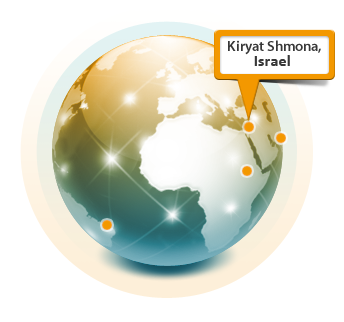
Kiryat Shmona, Israel
Project TEN is thrilled to partner with Israel Pathways to bring you a truly cross-cultural volunteer opportunity in the Galilee with participants from the United States, the UK, and Israel.
As a participant in a Jewish service-learning program, you can't get any closer to the center of Jewish history – and the Jewish future – than Israel. Project TEN has partnered with the Israel Pathways Masa program to bring you our first Israel-based Center in Kiryat Shmona, Israel's northernmost city.
In many ways Kiryat Shmona is picturesque and offers a decent quality of life compared to most of the world, but the city has suffered greatly over the years due to its proximity to the Lebanese border. Its location near Lebanon and far away from Israel's cultural and economic centers results in its having unique socio-economic needs that Project TEN will address.
About the Volunteer Service
The TEN-Israel Corps Center in Kiryat Shmona currently operates three 4-month tracks a year, and as of 2014 will operate each year two 5-month tracks and one 2-month summer track. Your volunteer service will total a minimum of 25 hours per week. Project TEN participants in Kiryat Shmona will have the option to choose from several meaningful volunteer activities:
Spend three days per week at your primary placement. Choose from:
At Dancinger High School, you can work with the local students in small group and one-on-one sessions to tutor them in English and help prepare them for their high school exit exams.
Tel Hai Elementary English provides support to students developing English language skills, and empowers children from low socioeconomic homes to bridge the gap between low achieving and high achieving students. Volunteer mentor and assist individual students to improve English skills and to complete their homework.
Youth Futures This Organization is a part of The Jewish Agency and works with 140 children at risk in Kiryat Shmona, on the personal, family, social and educational level. You will help the children with English homework.
Fixit is a second hand computer store and repair shop that operates as a non-profit organization. It provides computer parts at a low-cost to the community. You can work at the repair store and with a group of young and ambitious programmers.
The Tennis Center works to decrease the rate of middle school and high school drop-outs to provide a positive place for students to learn life skills and to develop values. Volunteers build connections with the kids through a social orientation and behavior design program. Tennis is a platform and tool to connect kids with themselves, their community and their environment. Many facilities are available including sports courts, work-out room, youth lounge, field trips, and a garden.
Yachad in the Galilee is a hostel and day care for adults with special needs. You will work with participants via therapeutic horse riding, therapeutic swimming and more.
Challenge NGO is a non-profit organization allowing you to work in outdoor activities including bike riding with children and adults with special needs.
Limited Vision Center allows you to work and interact with teenagers and adults with limited vision.
L'Havot Habashan Dog shelter is a no-kill shelter that is home to more than 250 animals. Help walk, feed and play with the dogs as well as garden and maintain the upkeep of the shelter.
Kismey Teva (Nature Magic) is an organization that raises awareness of the benefits of nature within the community. You will participate in the "Park Rangers" project, and help develop, clean, and preserve the city park and stream. In the park there are tours and lectures as well as ecological and research projects with the cooperation of students from Danciger High School.
Kiryat Shmona City Museum Help the staff of the Museum Renovation Project to document the untold story of the city in words and pictures.
Better Together allows you to work in a local low income neighborhood to establish a community garden and renovate the neighborhood bomb shelters. This project is unique because it involves the neighborhood residents in thinking, doing and decision making. Instead of doing things for the residents, we do things with the residents.
English Coffee Teach English for all ages and meet the Kiryat Shmona community in a local coffee shop.
Develop your own project - for the Kiryat Shmona community or for your community back home.
Find out moreEducational Travel Throughout Israel
Through our partnership with Israel Pathways, Project TEN volunteers take part in two weekend-long seminars throughout the country, learning about Israeli society, exploring the beauty of the land, and absorbing the richness of modern Israeli culture. These seminars bring together participants taking part in other Israel Pathways programs. In other words, you will have the opportunity to bond with your Project TEN team in Kiryat Shmona and also connect with a broader group of peers living all over Israel. Learn more about our Beit Midrash sessions here, from a first-hand impression of a TEN-Israel Corps participant.
In addition you will receive:
- Hebrew Ulpan
- A "home-stay" family with whom you can build a relationship and share Shabbat and holidays
- Fantastic staff from Project TEN and Israel Pathways to help you along the way
As part of Project TEN, Israel Corps participants pay only $1,100 (about $9 per day), which covers all meals, accommodations, activities, travel seminars, and more.
American and UK participants can register with Israel Pathways and apply for a Masa grant that will make the trip especially affordable.
To learn more about the benefits of volunteering in Israel read the Executive Summary and Full Report of our study - Serving a Complex Israel: A report on Israel-based Immersive Jewish Service-learning
What is Project TEN?
Investing in Social Change
"תן", pronounced "Ten," is the Hebrew word for "Give."
It is also the name of a Jewish Agency initiative that is revolutionizing the Jewish meaning of giving.
The Jewish Agency's Project TEN: Global Tikkun Olam harnesses the energies and passion of Jewish young adults from Israel and around the world, who spend three months working and learning together in onsite service projects in vulnerable communities throughout the world and in Israel.
By highlighting the Jewish values that speak directly to sustainable development, social justice, and leadership, Project TEN serves as a unique immersive service-learning framework for volunteers wishing to engage in sustainable development as they themselves develop – forming an extensive Jewish identity-building experience. Volunteers in each of our development centers are carefully chosen from all over the world, connecting the global Jewish family to one another and to Israel. Read more
Masa Israel Journey
Masa Israel Journey works to make it as easy as possible for young adults to go to Israel. We offer grants and scholarships to help make the experience more affordable. All Masa Israel participants are eligible to apply for universal grants and need-based scholarships towards the cost of your program. Your grant/scholarship will be deducted from the total cost of your program. The amount available depends on your country of origin, age, and the length of your program.
Take a look at our Grant and Scholarship Policy to find out more about eligibility criteria and for information about what you’ll need to apply.
Masa Israel Journey is funded jointly by The Jewish Agency for Israel and by the Government of Israel.
Life at the Center
The municipality of Kiryat Shmona has given Project TEN/Israel Corps free use of its local community center, the Vancouver House, for our activities.
The city is also providing, at reduced rent to Project TEN, a building with 6 apartments in which our participants can stay, with two to four participants in each apartment.
Shopping centers, pharmacies, and other conveniences are within easy travel distance, as Kiryat Shmona is a small town. Kiryat Shmona also has several restaurants, including kosher ones, and kosher food is widely available at local supermarkets and neighborhood grocery stores.
A unique aspect of our Center in Kiryat Shmona is that its location in Israel provides opportunities for an enriched Jewish identity curriculum and joint programs with other idealistic and enthusiastic young Jews from around the world.
In Kiryat Shmona, Project TEN partners with the Yuvalim Pluralist Center for Judaism at the local Tel-Hai College, which has created a new course specifically for TEN participants, adapting the TEN curriculum to the Israeli experience, and providing scholarships to the Israeli participants. The curriculum focuses on Judaism and Justice, with some additional discussion on the relationship between the individual Jew and the collective Jewish People. The TEN program at Kiryat Shmona includes joint seminars with Israelis and Jewish tourists in the Tlalim Masa program; trips around the northern Galilee; renowned speakers who will join us from outside the program; films; and Shabbat and Jewish holiday activities with the local residents of Kiryat Shmona.
Center Staff
Jacklin Eshaya
Director of the TEN-Tlalim Center in Kiryat Shmona
 Jacklin was born in Bulgaria and immigrated to Israel when she was 7 years old; she grew up in Haifa, where she was placed in classes for gifted students. During her army service she was an Educational Officer for one of Israel's most elite units.
After her army service, Jacklin toured around Thailand and India, and completed a tour guiding course – she's been a guide for Taglit-Birthright trips to Israel. She also spent five years teaching courses for Israel's university admissions examination.
Jacklin holds a BA in Psychology and Education from Tel-Hai College, and a Master's in Social Work from the University of Haifa. Most recently, she served as the Program Director for the Hillel at Tel-Hai College.
Jacklin is deeply devoted to the values of Social Activism and to Jewish Culture. She believes it is the privilege of every Jew to learn about our heritage and decide for him or herself how to make it relevant to his or her life. For 6 years she has volunteered at a Rape Crisis Center. She also helps organize bi-monthly women's meetings, is a member of (and volunteer for) a local co-op, and started a radio show about Social Activism.
Jacklin has two children, Yarden and Naveh.
Michal Mamman
Educational Director, TEN-Tlalim Center in Kiryat Shmona
 Michal was born and raised in Rosh Pina, in northern Israel, and spent a year after high school performing volunteer service with her youth movement. In the Israel Defense Forces she served as an Educational Officer. She then continued her educational work with the Dror Israel movement – educators who work in all social sectors to actualize the values of equality and social responsibility. In Haifa and Akko she guided children and youth at-risk, ran a workers’ rights center, ran activities in educational centers, and created programs for volunteers from England and North America.
Michal studied education at Beit Berel College and a documentary course at the Open University in Tel Aviv. She has worked as a tour guide and currently volunteers as a medical assistant in Red Magen David. She lives in Kiryat Shmona, where she studies film and production studies at Tel-Hai College, as part of her vision to make an impact in social justice.
Rabbi Amy Klein
Coordinator of Community Programs - Yuvalim Center for Jewish Identity and Culture
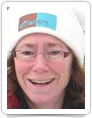 Rabbi Klein recently completed collaboration on a social justice and human rights curriculum for Rabbis for Human Rights (RHR). She serves on the board of RHR and volunteers weekly at the Elem center for youth at risk in Kiryat Shmona. She holds a B.A. degree from the
Nohar Maroz
Hebrew Language Instructor
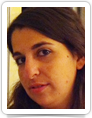 Nohar Maroz, 25, is a Social Work student at Tel-Hai College. Growing up in Jerusalem she was a dedicated student of the arts, especially painting. After high school she spent a year in a pre-army program at Kibbutz Ma’ayan, where she enjoyed “a great year with lots of greenery, studies, trips around Israel, and group living. I learned to love myself as well as the land of Israel!” As a soldier in the Israel Defense Forces, Nohar taught Hebrew to other soldiers who were new immigrants to Israel, a job she enjoyed greatly. Since then, she has traveled around the world – to California, New York, Kyrgyzstan, Tajikistan, and China – and spent a summer teaching Hebrew at a Reform Jewish overnight camp in Wisconsin. She now lives on Kibbutz Harduf.
Program Dates
The next Project TEN groups in Kiryat Shmona will take place on the following dates:
- October 29, 2013 - March 2, 2014
- March 10 - July 10, 2014
- Summer Track: July 15 - August 14, 2014
- August 25, 2014 - January 20, 2015
- January 27 - June 26, 2015
- Summer Track: July 1 - August 12, 2015
(Dates may change slightly; contact our staff at [email protected] for updates).
Photos
Cost
The unsubsidized cost for the Project TEN program in Kiryat Shmona, including volunteer, social, and learning activities; transportation between the center and your volunteer placement; and subsidized food and lodging, is $3500. However, Project TEN participants in Israel (who are coming from abroad) are eligible for significant grants and scholarships from Masa Israel Journey, which can bring down your expenses to the same $10-15 per day that you would pay for any other TEN center. Israelis, too, are eligible for extremely significant program subsidies, and should speak with the TEN coordinators about your true costs.
The cost does not include your airfare to the target country, health insurance, visa fees, or vaccinations.
Upon acceptance to the program you will be given instructions to reserve your place with a $300 registration payment through this website. The balance will be paid in two equal payments.
In the event that, after paying the registration fee, you must withdraw from the program, you will be refunded $200.
Financial Aid
For information about the Pay It Forward Fund, which might subsidize up to 50 percent of your costs -- with your pledge to pay back the scholarship in the next few years to provide aid to future volunteers -- please go to our cost section.
Remember, Project TEN participants in Israel are eligible for grants and scholarships from Masa Israel Journey - see above!
Kiryat Shmona: History, Culture and Economics
Since ancient times, humans have inhabited the area that is now northern Israel, due to its many water sources and lush and fertile land. Near Kiryat Shmona is Tel Dan – a "tel" is an area where successive peoples built cities, on top of the ruins of previous ones. The region also includes what was, until modern Jews arrived between the end of the 19th century and the beginning of the 20th, uninhabitable marshland.
Relics can be found in the area of Tel Dan dating back to the 5th millennium BCE (the "New Stone-Age"). Many empires ruled the area throughout the centuries: the Canaanites, Israelites, Babylonians, ancient Egyptians, Greeks, Romans, Muslims (Ottomans) and more. To this day, one can find relics in the area, from the time that the kingdom of Israel ruled the region (from the time of the separation between Judah and Israelite kingdoms). Much archeological evidence points to the years that King Jeroboam of Israel and his successors controlled the area.
The first modern Jewish immigrants arrived in the area of Kiryat Shmona in 1949, and the city was established as a Jewish town in July of that same year, on top of the ruins of what had been the Arab village of Khallassah. At first, the town was named "Kiryat Yosef" after an Israeli army commander named Yosef Trumpledore. Trumpledore had died together with 7 other men defending Tel-Hai (once a Jewish community near Kiryat Shmona). The town name was later changed to Kiryat Shmona (Shmona meaning "eight" in Hebrew), in order to also commemorate the other 7 Jewish fighters who died in the battle with Trumpledore.
The first Jewish settlers of Kiryat Shmona came to Israel from Yemen, Iraq, and Iran. Later, more Jews immigrated to Kiryat Shmona from North Africa, Romania, Russia, and other areas.
Kiryat Shmona has often gone through tumultuous times, having been bombarded by rockets and missiles from Lebanon and Syria during wars between Israel and its Arab neighbors.
Demographics
Today, according to the Israeli Central Bureau of Statistics, the city of Kiryat Shmona is home to approximately 23,000 inhabitants, of whom about 90 percent are Jewish. The average income for salaried employees is 4,800 shekels a month (about US$1260). According to the 2007 Local Authorities report, 48 percent of the workforce in Kiryat Shmona are salaried employees making at least minimum wage; a small percentage are self-employed, and many are unemployed.
Kiryat Shmona has an industrial zone that includes many businesses in the fields of electronics, glass, wood, metal, motor shops, food, textiles, and cosmetics. Many inhabitants of Kiryat Shmona and the surrounding area make a living from tourism-related businesses: hotels and guesthouses, vacation cabins, tourism companies, various tourist attractions etc. These businesses are hard-hit during times of military turmoil, when the region becomes a missile target and tourism decreases dramatically.
Sites of Interest
During your three months with Project TEN you will be working very hard at your volunteer service, Jewish learning, and other responsibilities. Although you will see much of the region through excursions and trips as part of your service learning and your Israel Pathways seminars, you might be interested in additionally touring the region on your own. If you want to arrive in Israel or the Galilee early or stay after Project TEN, and visit the sites on your own time, you are welcome to do so.
In and Around Kiryat Shmona:
- The Manara Cliff, just outside Kiryat Shmona, is a tourist site operated by the Manara kibbutz. At 2,500 ft. (750 meters), the cliff provides a beautiful view of the North of Israel and holds a variety of activities for all ages. The Manara Cliff is also the home of Israel's longest cable car. Admission prices vary for different activities and for weekends, holidays and weekdays.
- The Canada Center in Metula, a mere 10-15 minutes' driving distance from Kiryat Shmona, is a sports center which holds an ice-skating rink, swimming pool, bowling alley, shooting range, basketball court and many more sports attractions.
- Hapitriya ("The Mushroom") in Kibbutz Dan, located a 15-minute drive from Kiryat Shmona, is a local pub and concert venue which draws top performers from all over Israel.
- Kiryat Shmona has a local soccer team, Ironi Kiryat Shmona, which won the Israeli national soccer championship in the 2011/12 season. Their home stadium is the Kiryat Shmona city stadium which holds games throughout the season.
- Jeep and Quad-bike trips are a fun activity and there are many companies close by that organize such trips.
- The Nimrod Fort National Park, just outside of Kiryat Shmona, is an archeological site from the middle ages, on which a fort was constructed and fortified by Mamelukian and Eyubian armies over centuries. The fort lies on top of a narrow ridge, 800 meters (2,600 ft) above sea level. It has a fantastic view of the northern part of Israel.
- The Banias River, named after the Greek god Pan, is a perennial stream east of Kiryat Shmona. It is one of the sources of the Jordan River and a beautiful nature reserve. The recently erected "Hanging Trail" allows visitors to experience the river's might and beauty in between natural walls of Basalt rock. It is located in Kibbutz Snir, at the foot of Mount Hermon (20 minutes by car from Kiryat Shmona).
- Mount Hermon is the highest point in Israel. It is an inviting place to hike year-round, but is particularly noteworthy for its winter ski slopes, the only ski resort in Israel. On a clear day, from Mount Hermon you can see the mountains of the Galilee, the Golan, and southern Lebanon. According to tradition, the site where God promised the Land to Abraham is here on Mount Hermon, at the Har Habtarim site, almost 1300 meters above sea level.
- Kayaking on the Jordan River – in a few locations on the bank of the Jordan River, it is possible to go on kayaking trips with a variety of inflatable boats. Examples of such locations are Kibbutz Hagoshrim and Kfar Blum, which are both a short driving distance from Kiryat Shmona.
- For lovers of hiking and/or nature walks, there are many natural water springs and nature reserves in Kiryat Shmona and the surrounding area. The Tel Dan nature reserve and the Snir River are just two examples.
- At the Druze hospitality center in the village of Ein Kinya, you can learn about Druze life on the Golan and get a taste of it as well, with Druze pita, labaneh, and coffee.
Around the Galilee: A short car trip away is a variety of activities across the beautiful Galilee region, from wineries and horseback riding to water activities at Lake Kinneret and hiking at Mount Gilboa or Mount Tabor. The Israel Trail offers a great way to experience the region on foot. If you rent a car, you can easily enjoy the night life in Rosh Pina, the restaurants and historical sites in Tiberias, the spiritual center of Tzfat, or off-the-beaten path camping sites.
Around Israel: From Kiryat Shmona you can easily arrange to travel for overnight trips to Haifa, Tel Aviv, or Jerusalem, or head even further south to the Dead Sea, Negev desert, and Eilat. Bus connections are available to major cities.
Driving Times from Kiryat Shmona (estimated; bus information is correct as of December 2012 and does not apply on holidays or weekends):
Tiberias: 1 hour by car or bus (use Egged Bus Company lines 963, 840, 841, or 63. Frequency of buses changes over the day; check the Egged schedule)
Haifa: 1.5 hours by car (or 2-2.5 hours by bus; use Egged lines 500, 501, or 505 to Haifa's Hamifratz Central Station. Buses leave Kiryat Shmona every 45-60 minutes from 5:35 am to 9 pm)
Tel Aviv: 2.5 hours by car (or 3.5-5 hours by bus; use Egged bus lines 841, 842, 845 from Kiryat Shmona to Tel Aviv; buses leave every 15-45 minutes from 5:20 am to 8:15 pm)
Jerusalem: 3 hours by car (or 4 hours by bus; use Egged line 963, which leaves four times daily.)
Eilat: 7-8 hours (use Egged buses from Tel Aviv or Jerusalem)
Practical Details
Climate: The upper Galilee has hot, dry summers (June-August) with average temperatures of 18-29C (64-84F), and cold, rainy winters (December – March) with average temperatures of 5-10C (41-50C); it occasionally snows.
When packing your clothes, if you plan to travel to other areas of Israel to visit, keep in mind that despite Israel's small geographic size, it has many different climates. In the summer, Tel Aviv is exceptionally hot and humid, while Jerusalem is hot but dry. In the winter, Tel Aviv is pleasant, while Jerusalem can be chilly and rainy.
Time Zone: All of Israel is in the GMT +2 time zone. Most of the year it is seven hours ahead of New York City.
Currency: Israel uses the New Israeli Shekel (or "shekel," or NIS). One shekel is equivalent to 100 agurot. The value of the shekel fluctuates, but currently one US dollar is equivalent to about 3.8 or 4 NIS. So, when you come across an item to buy, if you divide the cost by 4, you'll get the approximate dollar value.
As examples to help you budget, here are some typical costs of products or services in Israel: A movie costs about 35 NIS; a small cappuccino at a café is about 15 NIS; a slice of pizza is 10-13 NIS; a large whole pizza is 50-60 NIS; a shawarma plus drink is 35-40 NIS; a dozen eggs is about 11 NIS; a small container of cottage cheese is about 6 NIS. Adult admission to the Canada Center in the nearby town of Metula is 79 NIS for ice-skating plus swimming, or 99 NIS for ice-skating, swimming, and bowling. There are a few kosher meat restaurants in Kiryat Shmona, with an average meal price of 70-80 NIS per person.
Electricity Supply: Israel uses 230 volts, 50 cycle AC. We recommend you bring a multi-outlet plug adaptor.
Getting Around: Kiryat Shmona has intra-city buses and taxi lines you can use to get around town – but since it is geographically small, walking is often the easiest way to get from point A to point B.
Helpful Phrases in Hebrew
Hello / goodbye = shalom
Please = b'vakasha
Thank you = todah
Good morning = bokair tov
Taxi = moh-neet
Please turn on the meter = tahd-leek et hah-moneh, b'vakasha
Hotel = mah-lone
How much does this cost? = kah-mah zeh oleh?
Where is the bathroom? = ay-foh ha-shay-root-im?
Street = Rechov
How does one get to . . . ? = aych mah-gee-im lih . . . ?
I do not speak Hebrew = Ah-nee lo mih-da-behr iv-reet (male) / Ah-nee lo mih-dah-behret iv-reet (female)
Do you speak English? = (to a male) ha-eem atah meh-dah-behr ahng-leet?
Do you speak English?= (to a female) ha-eem aht me-dah-behret ahng-leet?
May I speak in English? = Ef-shahr lih-dah-behr bih-ahng-leet?
Telephone = telephone
Cell phone = peleh-phone
I am volunteering = Ani mitnadev (male) / Ani mitnadevet (female)
Project TEN= pro-yekt ten
It is a Jewish Agency program = zoht toch-neet shel ha-Soch-noot
Apply
Questions
Questions?
Write to our staff at [email protected]
]]>

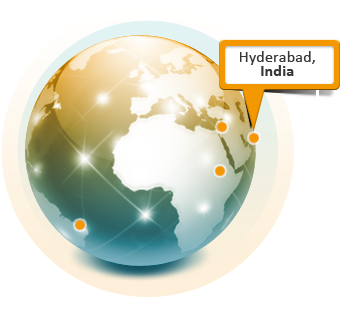
 Hyderabad, India
About the Volunteer Work
Project TEN-B’Tzedek participants in Hyderabad work in groups of 2-4 on given projects. For the most part, you'll be working on more than one project at a time, and therefore will be helping with different populations and social problems.
Projects may include the following (among others):
- Teach for a leading organization which aims to abolish child labor and enforce children's right to attend school.
- Work (and sometimes even sleep over) at a "Bridge Camp", a live-in school for highly marginalized children who previously had been forced into child labor and who now need to "bridge" the gaps in their education so they can re-enter mainstream schooling at the appropriate grade levels. Most have never attended school before. The Project TEN-B'Tzedek volunteers facilitate informal education in computers and English for 40 children, and run games, dancing, and songs; they also teach subject content to teachers, enriching the teachers' skills and stemming burn-out and teacher turn-over.
- Teach computers, English, math, mnemonics, dancing and arts at both a boys’ and a girls’ orphanage.
- Assist the elderly and mentally ill with basic tasks through an NGO that provides healthcare for vulnerable populations. Project TEN-B'Tzedek volunteers feed, dress, and talk with the beneficiaries and organize sports lessons and games. They also are building a database of patient files for the organization.
- Teach English and other subjects, and boost self-confidence and communications skills for young unemployed adults, at an Institute for Livelihood Education and Development, run by a leading South-East Asian organization. The institute works to provide disadvantaged youth with marketable skills and entrepreneurship training.
- Assist with screening children for heart disease, and support activities for families dealing with pediatric cardiology diagnoses.
We are looking for staff! Click here for details.
What is Project TEN?
Investing in Social Change
"תן", pronounced "Ten," is the Hebrew word for "Give."
It is also the name of a Jewish Agency initiative that is revolutionizing the Jewish meaning of giving.
The Jewish Agency's Project TEN: Global Tikkun Olam harnesses the energies and passion of Jewish young adults from Israel and around the world, who spend three months working and learning together in onsite service projects in vulnerable communities throughout the world and in Israel.
By highlighting the Jewish values that speak directly to sustainable development, social justice, and leadership, Project TEN serves as a unique immersive service-learning framework for volunteers wishing to engage in sustainable development as they themselves develop – forming an extensive Jewish identity-building experience. Volunteers in each of our development centers are carefully chosen from all over the world, connecting the global Jewish family to one another and to Israel. Read more
Life at the TEN-B'Tzedek Center

Project TEN in partnership with B'Tzedek.
Read our volunteer's blog: tenbtzedek
tenbtzedekA Global Jewish Service & Learning Center in Hyderabad, India
Center Staff
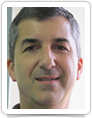
Yonatan Glaser
Director of the TEN-B'Tzedek Initiative in India
Yonatan Glaser grew up in Australia, moved to Israel over 25 years ago, and is the founder of B'Tzedek, an Israeli organization that develops leadership for social change and social justice among Jewish and Israeli youth. B'Tzedek is Hebrew for "in justice" or "through justice." The organization specializes in service-learning programs in Israel and India.
Holding degrees in Law, Economics, and Jewish Philosophy, Yonatan is also a graduate of the Mandel School of Educational Leadership. He has worked in formal and informal education settings, taught at the university level, worked for Israel's Ministry of Education, developed curricula, and initiated new organizations and educational programs. Before founding B'Tzedek, he served in New York with ARZA-URJ as the Central Educational Shaliach to the North American Reform Movement. Yonatan has appeared in Israeli broadcast and print media to promote better policies regarding Darfur and African asylum-seekers in Israel.
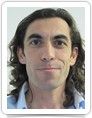


Ofer Namimi-Ha'Levi
Director of the Hyderabad TEN-B'Tzedek Center
Ofer Namimi-Ha'Levi has a long history with Hillel, for whom he has served as program director at the Hebrew University in Jerusalem and as the Founder-Director of Hillel at Ben-Gurion University in the Negev. After joining Tehuda-Bet Midrash for Jewish Leadership, he developed and initiated the vision for the establishment of Hillel centers in Israel's geographic peripheries. He then returned to Hillel to serve as Vice President of the national organization. He later became the CEO of the Association for the Recovery and Development of the Pioneers Colony of Rosh Pina. His commitments are to social change, human rights, and Jewish Renewal. He has proven expertise in initiating projects, training young leaders, and leading teams.
Manjula Pallipoyena
Deputy Director, Hyderabad TEN-B'Tzedek Center
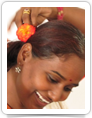 Manjula has over 14 years of experience in the world of India's non-profit organizations. She has worked as a coordinator, project manager, staff trainer, supervisor, or consultant to over 500 organizations, including the Society for Elimination of Rural Poverty, the Mahila Abhivruddi Society, the Byrraju Foundation, and the Andhra Pradesh Academy of Rural Development. Her expertise lies in community mobilization toward sustainable outcomes.
Manjula holds a Bachelor degree in Economics, Political Science, and Philosophy from Sri Padmavathi Women's College in Andhra Pradesh, India, and a Master's degree in Social Work with accreditation from the Council of Social Work Education in Virginia, USA.
Alex Mandel
Project Coordinator, Hyderabad TEN - B'Tzedek Center
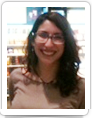 Alex is originally from Philadelphia, she is a daughter of an Israeli father and French-Algerian mother. Alex recently graduated from American University in Washington DC where she studied International Relations with focuses in both International Development and the Middle East.
Last year Alex designed and led a Service Learning trip to Israel for students from her university. The trip focus was African refugees in Israel and while there the group met with stakeholders from all sides of the issue, including: Knesset members, refugees, NGOs, as well South Tel Aviv community members from the HaTikvah neighborhood. After the trip she led an awareness campaign where, together with her co-leader, they began a speaking series at universities and Jewish communities. In September they had an article published in a magazine for human rights and social justice professionals.
This project was inspired by her experience working with the refugees during her year studying abroad in Tel Aviv (2010-2011). While there Alex had the pleasure of volunteering at the African Refugee Development Center (ARDC) in South Tel Aviv. She taught English to Eritrean and Sudanese refugees and worked in the Center's Asylum Application Assistance Department aiding refugees through Israel's asylum process.
Alex is thrilled to join the T.E.N-B'Tzedek team because she sees the work as the perfect intersection of all her passions: social justice, service-learning, development and Jewish programming. Her other interests include issues of migration, refugees, indigenous rights, gender studies, as well as traveling, live music, reading, writing and discovering new cultures, FOOD and people.
Omer Weinberg
Training and Project Development
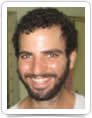 Omer Weinberg was born and raised in Haifa, Israel, where he instructed and served during his gap year in the Mahanot Olim youth movement.
Following his military service, where he served as commander in the 50th battalion, Omer decided to live out his dream of working as an educator in third world countries. The first Project TEN alumnus to also become a staff member, Omer volunteered in projects that teach hygiene and health care, and created connections with the local municipalities for the benefit of community members. He is now responsible for training methodology, project development and enhancing the group and community dynamics of the TEN participants.
Program Dates
The next Project TEN experiences in Hyderabad, India will take place on the following dates:
- November 5, 2013 - January 30, 2014
- February 12 - May 15, 2014
- May 21 - August 26, 2014
- Summer Track I: June 3 - July 30, 2014
- Summer Track II: July 1 - August 26, 2014
- September 5 - December 3, 2014
- December 9, 2014 - March 4, 2015
(Dates are liable to change; contact our staff at [email protected] for updates.)
Photos


Cost
The cost for the three-month Project TEN program, including volunteer, social, and learning activities; transportation between the center and your volunteer placement; and subsidized food and lodging, is between $10-15 per day.
The cost does not include your airfare to the target country, health insurance, visa fees, or vaccinations.
Upon acceptance to the program you will be given instructions to reserve your place with a $300 registration payment through this website. The balance will be paid in two equal payments.
In the event that, after paying the registration fee, you must withdraw from the program, you will be refunded $200.
Financial Aid
For information about the Pay It Forward Fund, which might subsidize up to 50 percent of your costs -- with your pledge to pay back the scholarship in the next few years to provide aid to future volunteers -- please go to our cost section.
Hyderabad Culture and Economy
Hyderabad, the capital of the Indian state of Andhra Pradesh, is located about 300 kilometers from India's southeastern coast, and is the fourth-most-populated city in the country.
Residents of Hyderabad are called Hyderabadi. The majority of the population are from the Telugu people, who speak Telugu and comprise one of the largest ethnic groups in the world. The city also houses large populations of Marathi (who originated in western India and speak Marathi) and Arabs. There are also a variety of minority ethnic groups from within India, as well as communities from Yemen, northern Africa, Armenia, Iran, Turkey, and other foreign areas.
The majority religion in Hyderabad is Hindu, with a very large Muslim presence. There are small communities of Christians, Sikhs, Buddhists, Jain, and Parsi.
The official languages of the city are Telugu and Urdu, but English and Hindi are widely spoken, especially among white-collar workers.
In many senses Hyderabad has a stable economy. In 2009, the World Bank Group rated it India's second-best city for doing business. It is the center of the Telugu (Tollywood) film industry, and is a center of the diamond and pearls trade, pharmaceuticals, biotechnology, and information technology. It has an excellent airport and many universities. Hyderabad has a long and rich history in literature, music, and other arts.
However, the city itself contains almost a thousand slums, with hundreds more in the suburbs – totaling 1.7 million people out of the city's population of 6.8 million. Two-thirds of the slum-dwellers have lived in the slums for at least ten years. More than a third of the "chief wage earners" are illiterate, and almost three-quarters of the households live below the poverty line –meaning they earn less than US$478 per year. Many of the slums contain schools and community centers, but there is a small percentage of children (3.7%) who do not attend school, and 3.1% work in child labor jobs, including hazardous ones.
The following important information was provided by The World Bank (www.worldbank.org), a non-profit organization working to reduce poverty world-wide:
India Economic Overview
Achievements:
With a population of more than 1.2 billion, India is the world's largest democracy. Over the past decade, the country's integration into the global economy has been accompanied by impressive economic growth. India has now emerged as a global player with the world's fourth-largest economy in purchasing power parity terms.
Poverty has been on the decline. According to official government of India estimates, poverty declined from 37.2% in 2004-05 to 29.8% in 2009-10. Rural poverty declined by 8 percentage points from 41.8% to 33.8% and urban poverty by 4.8 percentage points from 25.7% to 20.9% over the same period. The government is now investing in a set of pioneering initiatives to bring basic services to the poor – in elementary education, basic health care, health insurance, rural roads, and rural connectivity.
Challenges:
With more children entering elementary school, the need for universalizing secondary education has emerged. Equally important is building the skills of India's rapidly-expanding workforce, whose ranks are joined by some 8 million to 9 million new entrants each year. Moreover, a large proportion of the population lacks access to good quality health care, and progress in improving health indicators is slow. India also has one of the highest rates of malnutrition in the world.
India's growing economy is placing huge demands on critical infrastructure – power, roads, railways, ports, transportation systems, and water supply and sanitation. While the government has raised its investments in infrastructure, the investment gap remains daunting with an estimated $1 trillion required to meet the country's resource needs over the next five years. Accordingly, India is encouraging private participation in infrastructure development.
India is also undergoing a massive urban transformation. By 2030, the urban areas will be home to 40 percent of the country's people – doubling the urban population within a span of thirty years. How India manages this urbanization will largely determine the long-term sustainability of its towns and cities, and quality of life for a sizeable part of its population.
India's remarkable economic growth has raised the issue of environmental sustainability. With its high population density, stressed ecological systems, and substantial dependence on natural resources, the country is very vulnerable to climate change, the first impact of which will most likely be felt in the water sector.
Profile of India's Jewish Community
Coming soon.
Sites of Interest
During your three months with Project TEN you will be working very hard at your volunteer service, Jewish learning, and other responsibilities. However, we know that you might be interested in touring the region. If you want to arrive in Hyderabad early, or stay after Project TEN, and visit the sites on your own time, you are welcome to do so.
Hyderabad has a large variety of attractions, from art galleries, sports events, and museums to religious and historical sites. You'll find many buildings, especially in the Old City, with spectacular architecture. Here are just a few highlights:
In the Old City
- The icon of Hyderabad is the Charminar (literally, "four minarets") mosque, built in 1591 by Sultan Muhammad Quli Qutb Shah shortly after he had shifted his capital from Golkonda to what is now known as Hyderabad. Atop the minarets you can find a panoramic view of the city. There is an entrance fee (higher if you bring a video camera).
- Near Charminar is the Chowmahalla Palace, the seat of the Asaf Jahi (Nizam) dynasty that ruled the Hyderabad region from 1720 – 1948, and is one of Hyderabad's most prominent sites. There is an entrance fee; more if you bring a camera.
- The ruined city at Golconda Fort was started in 1143, and was the capital of the ancient Kingdom of Golkonda (c.1518–1687). Allow at least 2 hours to explore this site as it is expansive, and try to find a knowledgeable guide to enhance your tour. Just after sunset there is an English-language sound-and-light show (about one hour) that tells the story of the Fort. The entrance fee is Rs100.
- Mecca Masjid is one of the oldest mosques in the city and, with room for ten thousand worshippers, easily the largest. It was built in 1617; the bricks of the central arch are said to have been made of soil taken from Mecca itself.
- The Nizam's Museum is worth visiting if only to see the wardrobe of Mahbub Ali Pasha (reigned 1869-1911), who is said never to have worn the same thing twice. The wardrobe is built in two levels and occupies the entire length of one wing of the palace.
- Take a break in the relaxing environment around the Paigah Tombs. About 200 years old, they belong to the Paigah nobles, who were tied by blood and marriage to the Nizams. They are beautifully carved from lime and mortar, with marble inlay.
In the New City
- The AP State Museum displays a stunning array of artifacts dating from the last 2,000 years.
- The Birla Mandir is one of the best of the magnificent marble temples built by the Birlas. It is dedicated to Venkateshwara. If you choose to go inside, note that electronics must be checked at the entrance, and you'll have to take off your shoes, so go early when the ground is cool.
- The Natural History Museum has some rare and interesting exhibits.
- In the HITEC City neighborhood, across from the Cyber Tower, is the crafts village of Shilparamam, where you can purchase handicrafts and art work. There is also an area with realistic-looking sculptures of villagers performing their crafts, and a rock museum with natural rock formations that allegedly look life-like.
Practical Details
Obtaining an India Visa: You can apply for a visa to India in person or through the mail. We recommend applying through the mail to avoid waiting time and for greater convenience. Whichever method you use, you will need to get 2"x 2" photos yourself. Check this website: http://indiavisa.travisaoutsourcing.com/
Immunizations for India: After consulting with an Israeli physician who is an expert on travel to the Far East, we can offer you the following advisory to share with your doctor. Nothing here is meant to replace advice from your own physician, but the following suggestions may come in handy in terms of knowing what questions to ask your doctor.
Required immunizations:
- Hepatitis A
- Hepatitis B
- Tetanus (updated in the last 5 years)
- Polio (updated in the last 10 years)
- Typhoid
- MMR (mumps, measles, rubella)
Additional immunization considerations:
Your doctor might recommend inoculation against Japanese Encephalitis (JE), which requires two shots, 2-4 weeks apart. From our perspective this is optional. The disease does exist in India, but is extremely rare.
South American participants must show proof of vaccination against Yellow Fever to avoid being barred from entering India.
Participants from the USA might be advised by their doctors to take pills against malaria before leaving for India. Be aware that the risk of malaria is low, but the side effects of the pills can be serious. As always, the decision of whether to take them is to be made between you and your doctor.
Climate across India: It is said that there are only two seasons in India: wet and sweat. However, there are regional differences to keep in mind. No matter your destination, the months of March–August are hot and humid throughout the country.
June–July is monsoon season; it is very humid, with plenty of rain. The monsoons may not conform to a pattern: you might have a few hours of torrential downpour followed by sunshine, or you might experience days or weeks of drizzly rain. Do not count on staying dry with a raincoat, as the extreme humidity will make wearing one exceptionally uncomfortable. Most Indians simply carry an umbrella at all times, and sandals; they accept the fact that they will get wet often, and have chronically muddy feet.
December – February is winter in India, and most of the continent is cool and comfortable. Temperatures average 20C (68F) and can get cooler in the evenings. In the Himachal Pradesh and Kashmir regions it is colder, with much of Kashmir under snow.
April – November is a good time to visit the Himalayan regions of Himachal Pradesh and Kashmir, as the temperatures are cooler than the south. Kashmir does not have a monsoon season, so you can trek through November.
Time Zone: Hyderabad is in GMT +5.30, which puts it 10.5 hours ahead of New York, and 3.5 hours ahead of Israel.
Currency: The currency used in India is the Rupee, which is divided into 100 paise. Rupees are available in the following paper denominations: Rs 5, 10, 20, 50, 100, 500, and 1000. Coins are available in denominations of 5, 10, 20, 25, and 50 paise, and Rs 1, 2, and 5.
Rs 100,000 equals one lakh. It is written 1,00,000.
Rs 10,000,000 is one crore, and written 1,00,00,000.
You are unlikely to come across paise. Conversely, you will find that many people have difficulty giving change for notes larger than Rs100.
Electricity Supply: India uses 220-250 volts, 50 cycle AC. We recommend you bring a multi-outlet plug adaptor.
Helpful Phrases in Hindi
Hello = na-ma-skar / na-ma-ste
Goodbye = na-ma-skar / na-ma-ste
Please= kripaya
Cold=thanda
Hot= garam
Thank you = dhan-ya-vad / shu-khri-ya
It is nice to meet you= aap se mil ke khu-shi hui
Where is the bathroom?= bath-room kid-har hai
How much does this cost?= yeh kit-ne ka hai
How are you? = aap kaise hain / kya haal hai
Where is the phone? = phone ka-haan hain
What time is it? Kya sa-may hai
I want drinking water = mujhe pine ka paani chahiye
I want a ticket = mujhe ticket chahiye
Are you open tomorrow = aap kal khule hain
This is too expensive = ye bahut mehenga hai / bahut jada dam hai
Make your price less = bhaav (daam) kam karo
Help = ba-chow
I do not know = mujhe malum nehi
doctor = doctor
police = pu-lis
pharmacy = chem.-ist / da-waikhana
taxi = taxi
train = train / relgari
subway = Metro
bus = bus
street = sa-dak / rasta
left = ba-yen
right= da-yen
fish = mach-li
vegetable = sub-zi
salad = sa-lad
Indian circular bread = ro-tee
bread = bread
cottage cheese = pa-neer
rice = cha-wal
potato = a-a-lu
chocolate = chocolate
dessert = mit-hai
coffee = coffee
tea = tea / chai (Indian tea made in milk)
milk = doodh
water = pa-a-nee
Apply
Questions
For any questions, please write to us at [email protected]
]]>
 Gondar, Ethiopia
About the Volunteer Work
The Project TEN Center is situated a short distance from downtown Gondar and from the camp for members of the Ethiopian Jewish community who seek to move to Israel, making volunteer activities easily accessible. After a one-week orientation, the volunteers divide themselves into groups, each group devoting itself to a different activity; activities include, among other projects:

- Teaching Hebrew, playing with kindergarten children, and running activities for teens at The Jewish Agency's Gondar complex for future olim to Israel.
- Teaching English, motor skills, crafts, and music to children and teens at the St. Raphael Boarding School for the Blind.
- Organizing after-school activities and providing homework help in English and math, for homeless and orphaned children at the Yenege Tesfa ("Hope for Tomorrow") orphanage.
- Teaching homeless children through Yenege Tesfa's "mobile schools," which travel to poor neighborhoods so that children who do not regularly attend school can have school come to them.
- Creating urban fields and gardens for single-mother families, to help them increase their crop yields in a self-sustaining way. Volunteers provide manual labor: ox-tilling new fields, planting vegetables to help rotate the crops and provide variety to the family's diet, and laying down drip irrigation.
- Assisting in building new infrastructure at the "plastic camp" that houses the extremely poor.
There are also many opportunities for Project TEN participants to fill local needs on their own initiative. For example, one past group wrote, designed, and distributed to hotels a set of coupons that can be exchanged for a loaf of bread at local bakeries; instead of giving cash to street children (which is often taken by adults), tourists can instead give the children these coupons, to ensure the children actually receive food.
Another past group, on their own initiative, taught English during their lunch hours to the staff of the Bridge for Hope agricultural village for orphans.
The staff and volunteers also develop projects for the beautification of the Center, for their own benefit and for the benefit of future groups of volunteers. Projects may include a container garden, a music room, a book and digital library, etc.
The volunteer work may expose you to situations that you find emotionally challenging. The Center's staff will always be there to support you.
We are looking for staff! Click here for details.
What is Project TEN?
Investing in Social Change
"תן", pronounced "Ten," is the Hebrew word for "Give."
It is also the name of a Jewish Agency initiative that is revolutionizing the Jewish meaning of giving.
The Jewish Agency's Project TEN: Global Tikkun Olam harnesses the energies and passion of Jewish young adults from Israel and around the world, who spend three months working and learning together in onsite service projects in vulnerable communities throughout the world and in Israel.
By highlighting the Jewish values that speak directly to sustainable development, social justice, and leadership, Project TEN serves as a unique immersive service-learning framework for volunteers wishing to engage in sustainable development as they themselves develop – forming an extensive Jewish identity-building experience. Volunteers in each of our development centers are carefully chosen from all over the world, connecting the global Jewish family to one another and to Israel. Read more
Life at the Center
The Project TEN Center in Gondar is situated in a closed compound that holds two buildings, and is patrolled 24/7. Each building contains "apartments" – clean bedrooms, most of which have en suite bathrooms – as well as classrooms, a communal dining room, kitchen, and other spaces. The volunteers will stay in one building, and the staff in the other. The volunteers will board together with 2-4 in each room, and the atmosphere will be kibbutz-style.
The center will employ local staff to help clean and cook. However, it is the volunteers' responsibility to maintain cleanliness in their rooms and other areas, and to prepare Shabbat dinner each week.
The food in all of the centers is kosher-style vegetarian. If you crave meat, you can travel into Gondar and enjoy a restaurant meal at a ridiculously low price. (Note: there are no kosher restaurants.)
The water in Gondar is clean, but we do not recommend drinking it from just any source. Safe water will be provided at the center, and bottled water is available at stores.
Wireless internet is provided for free in the rooms, though we advise against bringing expensive gadgets with you.
Center Staff
 Nitai Schendar
Director of the Project TEN Gondar Center
Nitai Schendar, 27, was born in Jerusalem and grew up in its Old City. He's been working with Ethiopians since he was a teenager; his career includes full-time work at a Jewish Agency absorption center for Ethiopian immigrants to Israel, where he learned about the trials and triumphs of their Aliyah and about Ethiopian culture.
Nitai decided to see the roots of that Aliyah for himself, and traveled and volunteered all over Ethiopia. He lived for long stretches in Addis Ababa, where he worked in the Mother Teresa Mission, and in Gondar's Chechela neighborhood. He has guided tours all over the country and is well-connected with local NGOs and charity organizations that operate there.
Nitai re-joined The Jewish Agency to assist in its management of the Gondar Complex, where thousands of members of the Ethiopian Jewish community receive healthcare, food, and general and Jewish education. He considers his new role as Director of Project TEN in Gondar to be one of his greatest adventures yet.
Program Dates
The next Project TEN groups in Gondar will take place on the following dates:
- November 12, 2013 - February 10, 2014
- February 11 - May 11, 2014
- May 19 - August 27, 2014
- Summer Track I: June 2 - July 30, 2014
- Summer Track II: June 26 - August 27, 2014
- September 10 - December 9, 2014
- December 15, 2014 - March 3, 2015
(Dates may change slightly; contact our staff at [email protected] for updates).
Photos


Cost
The cost for the three-month Project TEN program, including volunteer, social, and learning activities; transportation between the center and your volunteer placement; and subsidized food and lodging, is between $10-15 per day.
The cost does not include your airfare to the target country, health insurance, visa fees, or vaccinations.
Upon acceptance to the program you will be given instructions to reserve your place with a $300 registration payment through this website. The balance will be paid in two equal payments.
In the event that, after paying the registration fee, you must withdraw from the program, you will be refunded $200.
Financial Aid
For information about the Pay It Forward Fund, which might subsidize up to 50 percent of your costs -- with your pledge to pay back the scholarship in the next few years to provide aid to future volunteers -- please go to our cost section.
Ethiopia: History, Culture, and Economics
Known in ancient times as Abyssinia, Ethiopia is culturally unique, as it has never been colonized by a European power, and spent many years isolated from external forces. Among the ancient artifacts you can visit from Ethiopia's unbroken chain of cultural history are the enormous Obelisks of Aksum (400 C.E.), the rock-hewn churches of Lalibela (1,200 C.E.) and the Tigray Rock Churches.
Ethiopia boasts some of the most stunning sites on the African continent. There are many places to hike and camp in Ethiopia; this is one country where you can truly get away from power lines and Coca Cola, and spend time in true wilderness, such as at the Nile Gorge or the Simien mountains, whose ruggedly-carved steeples and spires form a UNESCO World Heritage site. Or visit the hot but fascinating Danikal Depression, with its volcanoes and lunar-like landscape. In the Omo Valley, many tribes still live lifestyles untouched by modern technology.
The population of Ethiopia is estimated at around 84 million, of whom more than half are under 20 years old.
Throughout Ethiopia, more than 80 different languages are spoken by local populations, testifying to the cultural richness here. The main three languages are Amharic (the national language), Tigrigna, and Oromigna. English is spoken widely.
The food and drink of Ethiopia reflects the many different cultures. A typical dish is Wot, a hot spicy stew of meat or vegetables, seasoned with a blend of Berbere (chili powder). It may also be made with Doro (chicken), and is normally served with Injera, the traditional spongy pancake made from a fermented Teff flour batter. The famous honey wine, or Tej, is found all over the country as is Tela, a local beer, and Katikala, distilled liquor.
Ethiopian writing uses unique characters (letters), and the annual holidays and festivals follow a unique calendar. For example, Ethiopian Christmas comes out on January 7.
The Ethiopian Orthodox Christian tradition has been undisturbed here since 300 C.E., and there are many fascinating ancient churches to visit. After Christianity, another main religion in Ethiopia is Islam.
The following important information was provided by The World Bank (www.worldbank.org), a non-profit organization working to reduce poverty world-wide:
Per-Capita Income
With a population of about 84 million (2012), Ethiopia is the second-most populous country in Sub-Saharan Africa, but also the sixth-poorest country in the world, with a 2010 per-capita income of only $390, compared to $1,165 for the Sub-Saharan African average.
Political Context
For much of the 20th century, Ethiopia was ruled by highly centralized governments. The current ruling party (the Ethiopian People's Revolutionary Democratic Front (EPRDF) has governed Ethiopia since 1991. Since taking power, the EPRDF has led an ambitious reform effort to initiate a transition to a more democratic system of governance and decentralize authority. This has involved devolving powers and mandates first to regional states, and then to woredas, or district authorities, and kebeles, or village authorities.
Although the formal Ethiopian state structure has been transformed from a highly centralized system to a federal and increasingly decentralized one, a number of challenges remain. The national elections in 2005 and 2010, and the largely uncontested local elections in April 2008, illustrated the fragility of the democratic transition, the dominance of the EPRDF, and the weakened state of the opposition. The May 2010 parliamentary elections resulted in a 99.6 percent victory for the ruling EPRDF and its allies, reducing the opposition from 174 to only two seats in the 547-member lower house.
Development Challenges
The main challenge for Ethiopia is to continue and accelerate the progress made in recent years toward the Millennium Development Goals (MDGs) and to address the causes of poverty among its population.
Over the past two decades, there has been significant progress in key human development indicators: primary school enrollments have quadrupled, child mortality has been cut in half, and the number of people with access to clean water has more than doubled. More recently, poverty reduction has accelerated. The poverty headcount measured by nationally representative household surveys was 44 percent in 1999/2000, but fell to 39 percent in 2004/05 and further down to 30 percent in 2010/11.
These gains, together with more recent moves to strengthen the fight against malaria and HIV/AIDS, paint a picture of improved well-being in Ethiopia. Notwithstanding the progress in critical aspects of human development, Ethiopia needs considerable investment and improved policies to achieve some of the Millennium Development Goals by 2015, given the country's low starting point.
Sites of Interest by City
During your three months with Project TEN you will be working very hard at your volunteer service, Jewish learning, and other responsibilities. However, we know that you might be interested in touring the region. If you want to arrive in Ethiopia early, or stay after Project TEN, and visit the sites on your own time, you are welcome to do so.
- Addis Ababa: The capital of Ethiopia. The Mercato is the largest in Africa. Although the Mercato is no more or less safe than the rest of the city, we recommend taking a day to scope it out without money or cameras – then come back once you know the lay of the land.
- Arba Minch: On the way to Omo Valley, you'll see vast numbers of crocodiles and hippopotami at Lake Chamo.
- Axum: the area where the Ark of the Covenant is reputed to be kept, and the headquarters of the Ethiopian Orthodox Church.
- Bahir Dar: A large lakeside town with an international airport. Among the sites there are the Blue Nile Falls, and the Market.
- Bale Mountains: in southwest-Ethiopia, enjoy trekking in the Afro-Alpine plateaus.
- Blue Nile Gorge, between Addis Ababa and Bahir Dar, has breathtaking views, waterfalls, and swimming holes.
- Gondar: The palace compound contains several castles built by Ethiopian Emperors 300-400 years ago. The city is also the gateway to the Simien Mountains. While hiking through the mountains – you'll need a guide, as well as an armed guard -- you will find Gelada baboons who will sit beside your path, oblivious to you, as well as fascinating flora and other fauna, and traditional farmers and small settlements.
- Hawassa: the capital of southern Ethiopia is a laid-back, lakeside university town with numerous hotels. Take a boat to see hippopotami.
- Lake Langano: this is the best of the Rift Valley lakes for swimming. There are no towns on the lake, just isolated hotels such as the Sabana Beach Resort.
- Lalibela: Hire a donkey for a day trip up the mountain to see famous rock-hews churches there and enjoy the views.
- Omo Valley: book a guide, and visit one or more of the indigenous tribes.
- Shashemene: The heart of the Rastafari migrated here, and expatriate Jamaicans blend with locals to create a city that is culturally distinct from the rest of Ethiopia. Visit a "pharmacy" and learn about traditional medicine.
- Wenchi Crater Lake: One of the most beautiful places on the planet. For a very low fee you can take a five-hour pony trek. Or make it a two-day trip from Addis Ababa, and stay overnight at Ambo or Wolisso.
- Western Ethiopia Eco-Tourist Route: Starting at Addis Ababa via Ambo, the Wenchi Crater Lake, and Guder falls, this is a route of several hundred kilometers that takes you through Nekemte (with its 18th-century palace and the Wollega Museum), the Didessa Valley (fishing, bird-watching, etc.), Gimbi (organic coffee plantations, traditional gold mining), Kelem (Dhati-Walal National Park), Gambella National Park, and back to Addis Ababa.
We recommend the 2009 edition of The Bradt Guide to Ethiopia; a new edition is also due in 2012.
Profile of the Ethiopian Jewish Community
Until 1948
For more than 2000 years, Ethiopian Jewry, called Falashas or outsiders by their neighbors, maintained their Jewish beliefs and practices in the remote hills of Gondar, away from the regulation of ruling dynasties and dominant religions. With the rising popularity of Christianity in the fourth century, Ethiopian Jews first fled to the mountainous Gondar region in order to escape persecution and forced conversion. In the 10th century, Queen Judith overthrew the Axum dynasty and uprooted Christianity’s hold on the country, ushering in approximately 350 years of peace between Ethiopia’s Jewish, Christian and Muslim citizens. Yet, the Axum dynasty returned to the throne once again in 1270 and set off 400 years of tribal war and bloodshed between the religious factions. In 1624, Jewish forces were defeated by Portuguese-backed Ethiopians and a long period of oppression began as Jewish captives were sold into slavery or forcibly baptized. Their lands were confiscated their writings and religious books were burned, and the practice of any form of Jewish religion was forbidden in Ethiopia.
Over the next couple of hundred years, despite some encounters with explorers and missionaries, Ethiopia’s Jewish community remained fairly isolated. In 1908, the chief rabbis of 45 countries collectively declared their social recognition according to Jewish law (Halacha) of Ethiopian Jewry, due to the work of Professor Jaques Faitlovitch who traveled to Gondar in 1904 and stayed with the local population for 18 months, observing their customs.
Faitlovitch studied Amharic and Tigrinia at the Ecole des Hautes Etudes in Paris under Professor Yosef Halevi, who first visited the Ethiopian Jews in 1867. Upon his return to Europe, Halevi published a Kol Korei, or public proclamation, asking the world Jewish community to save the Ethiopian Jews, or Beta Israel.
Faitlovich perpetuated Halevi’s advocacy and appealed to the European Jewish community for aid to the Jews of Ethiopia. He returned to Ethiopia in 1920 and established a small local school and the community’s first boarding school in Addis Ababa in 1924.
Emigration 1948-1984
When Israel gained its independence in 1948, The Jewish Agency for Israel set out on its pioneering mission to bring Diaspora Jews to Israel. The Jewish Agency sent educational emissaries to Ethiopia to help encourage Aliyah to Israel among local Jews and teach Hebrew and Jewish studies. By 1955, The Jewish Agency had founded several local schools and a teacher’s seminary for the Beta Israel and also began to send small groups of Ethiopian Jews to Israel.
Since the seventeenth century, Jews were not allowed to own land and were treated poorly by their neighbors. By the middle of the twentieth century, the political situation for Jews in Ethiopia had worsened and Jews were blamed as scapegoats for any national misfortune that arose. In 1974, political turmoil left nearly 2,500 Jews dead and 7,000 homeless. By 1977, the situation had become so unbearable that groups of Jews began to flee the country and established refugee camps in Sudan. Soon after their emigration had begun, Jews caught traveling across Ethiopia were charged, imprisoned and tortured. But the exodus continued and the number of Jews living in squalid refugee camps in Sudan quickly rose into the thousands.
After taking office in1977, Israeli Prime Minister Menachem Begin was eager to facilitate the rescue of Ethiopia’s Jews. Israel began selling arms to ruling dictator Colonel Mengitsu in exchange for allowing Ethiopian Jews to leave for Israel. In August and December of 1977, Begin asked Mengitsu to allow 120 Ethiopian Jews to board two Israeli military planes who emptied their weapons cargo in Ethiopia. Mengitsu agreed, setting an important precedent for the mass exodus of Operation Moses.
In the early 1980s, practicing Judaism and teaching Hebrew was strictly forbidden. The government confiscated all Hebrew books, closed all Jewish schools and synagogues and arrested all Jewish students caught speaking to tourists. Ethiopian Jewish community leaders, or Kesim, were routinely harassed by the government, while other Jewish community figures were falsely imprisoned as “Zionist Spies”.
Famine, a constant threat of war, forced conscription at the age of 12, high infant mortality rates, poor health care and terrible living conditions further threatened the survival of Ethiopian Jewry. Diaspora Jews prompted the government of Israel to apply pressure on the Ethiopian government to release Ethiopian Jews and attempt to rescue the thousand of Jews struggling to survive in both Sudan and Ethiopia.
Operation Moses
During the early 1980’s, Israel had already begun covert operatives to smuggle Ethiopian Jews out of Ethiopia and Sudan into Israel. By the end of 1982, approximately 2,500 Ethiopian Jews had been resettled in Israel and, during 1983, another 1,800 left for Sudan on foot. Israeli agents began to expedite their operations by using Hercules military transport planes that can each hold 200 passengers.
The large number of Jews crossing from Ethiopia into Sudan by foot was enacting a terrible human toll; those who survived the trek arrived at overcrowded refugee camps with substandard conditions. The Israeli Government realized that a large-scale operation was necessary and on November 21st 1984, Operation Moses began. With diplomatic tensions high in Ethiopia, as well as the risk of flying over Arab airspace, the operation was carried out with utmost secrecy by the Jewish Agency. Refugees were bused from the camps directly to a military airport near Khartoum and were airlifted directly to Israel. Within six weeks, between November 21st 1984 and January 5th 1985, The Jewish Agency had successfully brought 7,000 Ethiopian Jews to Israel.
News leaks ended Operation Moses prematurely, as Arab nations pressured the Sudanese government to prevent Ethiopian Jews from reaching Sudanese territory. About 600 Jews were left behind in Sudan and almost 15,000 Jews were left behind in Ethiopia.
In the five years that followed, political obstacles prevented further rescue of Jews from Ethiopia. In 1985, US Vice President George Bush initiated a follow-up mission called Operation Joshua to bring 600 Ethiopian Jews remaining in Sudan to Israel, however negotiations fell on deaf ears. While thousands were fortunate to have escaped during Operation Moses and Operation Joshua, families were separated from each other during the operations. Since children and elderly were the first to be airlifted, approximately 1,600 Ethiopian children became “orphans of circumstance,” separated from their families still in Ethiopia.
Operation Solomon
In November 1989, Ethiopia and Israel reached an agreement that would allow Ethiopian Jews to move to Israel under the context of family reunification. With diplomatic relations resumed, the Ethiopian government was willing to allow immigration to Israel beyond the original framework of reunification.
Between January 1990 and May 1991, 8,500 Ethiopian Jews were brought to Israel. In May 1991, rebel forces overthrew Mengitsu’s dictatorship and by mid-year claimed control of Ethiopia’s capital city, Addis Ababa. Prospects for retrieving the remaining 14,500 Beta Israel were beginning to look very bleak.
Realizing the need for immediate action, The Jewish Agency and the Israeli Government, under the leadership of Prime Minister Yitzhak Shamir, initiated what would become one of the quickest and most amazing rescue efforts in history. Beginning on Friday, May 24th, El Al, Israel’s national airline, flew 36 jumbo jets and Hercules military transport planes for 36 hours straight. All of the interior seats were removed to accommodate the maximum number of passengers.
Operation Solomon, named after the king from whom the Beta Israel draw their lineage, ended almost as quickly as it began. Timing was critical since the fickle rebel forces could easily change their minds and use the Beta Israel as bargaining tools for more power with Israel or the United States.
As Jews around the world were preparing for the end of the Sabbath, they were greeted with the amazing news of Operation Solomon: within 36 hours, a total of 14,310 Ethiopian Jews were rescued and resettled in Israel by the Jewish Agency.
The powerful modern exodus of Operation Solomon demonstrated the importance of the Jewish state as the beacon of light for distressed Jews around the world. After thousands of years of exile, Ethiopian Jews had returned to the land of Zion where families who had been separated for a decade were reunited in emotional ceremonies.
Rescue of Jews from Quara
In May 1991, when The Jewish Agency airlifted 14,000 Ethiopian Jews with Operation Solomon, the Quara Jews were left behind. Their province was under rebel control and they could not make their way to Addis Ababa to take part in the exodus. In 1992, about 3,500 Jews living in Upper Quara were brought to Israel, while the 2,500 Jews of Lower Quara were once again left behind because of civil unrest in the area.
In 1999, the war between Ethiopia and Eritrea escalated, which further exacerbated the already desperate situation of the Quara Jews. Since there were no internal flights to Gondar, the Jewish Agency sent buses to bring the Quara Jews to Addis Ababa. Under difficult conditions, including flooding and rough terrain, the Jewish Agency over the course of 37 days, brought 1,388 Quara Jews home to Israel.
Falas Mura – Family Reunification
Following Operation Solomon, small waves of Ethiopian immigrants called Falas Mura continued to immigrate to Israel. Large numbers of these Ethiopian Jews, termed Falashas or outsiders, were convert-ed to Christianity under duress but maintained their Jewish faith and identity. Over the years, the Falas Mura fled persecution and sought refuge at the residential compounds in Addis Ababa and Gondar.
Before Operation Solomon, the Falas Mura were relatively unknown to the Jewish community outside of Ethiopia. When they first tried to board the planes to Israel with other Ethiopian immigrants, their commitment to Judaism was questioned and large numbers were turned away. Viewing themselves as Jews who needed help reconnecting with their faith, the Falas Mura maintained that they were entitled to immigrate to Israel.
Though the issue remained a matter of fierce debate in Israel, the practical side of the dispute – whether or not the Falas Mura had the right to immigrate to Israel – was determined by the Israeli government in 2003: any Ethiopian who could trace maternal connection to Judaism could come to Israel along with their immediate family.
Since 2011: The Role of The Jewish Agency
In 2011, the Government of Israel requested that The Jewish Agency assume responsibility for operations in Gondar, Ethiopia, to facilitate the Aliyah of members of the extended Jewish community there. The Jewish Agency Community Center is the hub for Ethiopians awaiting their flights to Israel.
The Jewish Agency upgraded the physical environment and the program content of what was originally a compound around which members of the extended Jewish community gathered. The Community Center offers classroom instruction for parents and children; Jewish cultural activities; a synagogue; a mikveh; and a nutrition center, which provides critical food assistance.
The Jewish Agency is investing tremendous effort to provide the members of the extended Jewish community with the skills, educational programming, and support necessary to begin their lives in Israel.
The Gondar Community Center aims to prepare new olim for what they may experience upon their arrival in Israel. Once they have disembarked from their Aliyah flight, the newly-arrived Israeli citizens are brought to one of the 17 Jewish Agency Absorption Centers throughout Israel dedicated to resettling Ethiopian olim. The 24-to-30-month average stay at Jewish Agency Absorption Centers serving Ethiopian olim is recognized as an important window of opportunity to build upon the formal and informal education programs for children and adults offered in Gondar at the Community Center.
The Jewish Agency will bring the remaining members of the extended Jewish community to Israel by October 2013, completing our Aliyah-preparation programming in Gondar. The Community Center in Gondar will cease operations as the last in this historic group make their way to Israel. The Jewish Agency will then hand over our elementary school to the municipality of Gondar.
Practical Details
Climate and What to Pack: There are two seasons: the dry season prevails from October through May; the wet season runs from June to September.
For volunteering in Gondar during the wet season, pack a raincoat and sturdy, high shoes or boots for stomping around in the mud. Bring light clothing for the spring/summer weather during the day, and some warm clothes for the chilly nights. Note that in Ethiopia it is not customary to wear tight or revealing clothing; we advise you to respect this local custom. You'll also need a hat, insect repellent, and sunblock. It is difficult in Ethiopia to find toiletries such as quality soaps and shampoo, so you are advised to bring your own. The center will provide bed linens and towels. We suggest you leave valuables and sophisticated electronics at home.
Time Zone: Ethiopia is in the GMT + 3 hours time zone, which is one hour ahead of Israel and 8 hours ahead of New York most of the year.
Currency: The local currency is the Ethiopian Birr made up of 100 cents. Tourists may bring in with them any amount of foreign currency, provided you make a declaration of the currency to customs when you arrive. Keep the currency declaration form, since you'll need to present it when you leave the country. Legally, you may exchange foreign currency for Birrs (or vice versa) only at authorized banks and hotels. There is a foreign-currency bank at the airport for changing your excess Birrs when you leave. At banks, you can withdraw money at ATMs using an international Visa or MasterCard.
At the current exchange rates, one US dollar is about 17.5 Birr. Examples of prices in Ethiopia: an average meal at a restaurant in Gondar is about 37 Birr, just over $2; a large bottle of water is about 11 Birr; coffee and a pastry costs about 15 Birr.
Electricity Supply: Ethiopia uses 220 volts, 50 cycles AC. We recommend bringing a multi-outlet plug adaptor.
Helpful Phrases in Amharic
Tadias! = Hello!
Deh-nah-neh? = How are you (to a male)
Deh-nah-nesh? = How are you (to a female)
Deh-hay-nah = I am fine
amesegenalew- thank you
Eggs-abh-hair yeest-leeg-nee = may God give you everything you need
Apply
Questions
For any questions, please write to us at [email protected]